
Palm Beach, FL
- Elevation
- 6 ft
- General Quality Overall rating out of 100
Highlights
What stands out in Palm Beach
Explore
More places like Palm Beach
About Palm Beach
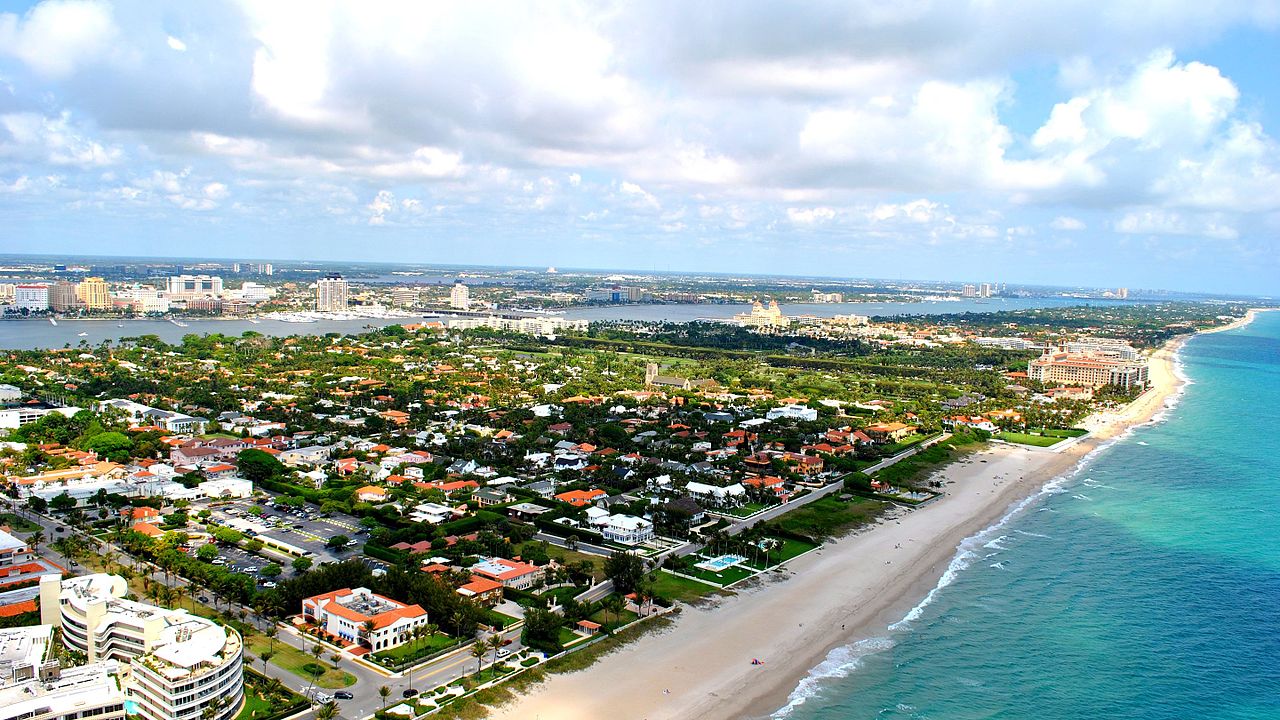
Palm Beach sits on a narrow barrier island between the Atlantic Ocean and the Intracoastal Waterway, connected to West Palm Beach by three bridges. While the island feels like a private oasis, daily life is closely tied to the mainland, where you will find the airport, hospitals, and train stations for Brightline and Tri-Rail. Life here follows a distinct seasonal ebb and flow. You share the town with around 9,000 full-time residents during the summer, but the population more than doubles between November and April. During the winter peak, dinner reservations become prized possessions, streets buzz with activity, and community events fill the calendar before the quiet warmth of spring returns.

The island's signature luxury and charm trace back to the Gilded Age. In the late 1890s, railroad tycoon Henry Flagler extended his railway south, built grand resorts like The Breakers, and established his winter estate, Whitehall, which now operates as the Flagler Museum. Soon after, architect Addison Mizner defined Palm Beach's visual identity by introducing Mediterranean Revival architecture. Mizner designed the romantic courtyards, hidden passages, and tiled fountains of Worth Avenue, giving the commercial district a distinctive character that feels like a coastal Mediterranean village.

Everyday living revolves around hubs like Worth Avenue, Royal Poinciana Way, and the Royal Poinciana Plaza. Alongside upscale designer boutiques and fine dining, you will find local groceries, pharmacies, and professional services that keep the island running smoothly all year. If you plan to buy or remodel a home, keep in mind that Palm Beach maintains strict preservation rules. Town commissions carefully review any visible changes to properties to safeguard historic architecture and aesthetic standards. The process requires patience and extra planning, but it ensures neighborhoods stay immaculate.

Culture and outdoor recreation are easy to come by. The Society of the Four Arts anchors the local arts scene with a 10-acre campus featuring botanical gardens, live performances, art galleries, and community libraries. For fitness and fresh air, the paved Lake Trail winds for nearly six miles along the western shoreline, giving walkers, joggers, and cyclists gorgeous views of the Intracoastal and historic backyards. Best of all, no matter where you live on the island, the clean Atlantic beachfront is never more than a few minutes away.
Top Rating Signals
Highest current ratings for this town.
Loading town details...