
Flagstaff, AZ
- Elevation
- 6,900 ft
- General Quality Overall rating out of 100
Highlights
What stands out in Flagstaff
Explore
More places like Flagstaff
About Flagstaff
If you step outside on a clear night in Flagstaff, the first thing you notice is the canopy of stars overhead. The city takes night skies seriously, having passed pioneering outdoor lighting codes that earned it recognition as the world's first International Dark Sky City. That deep relationship with astronomy has deep roots. Lowell Observatory, perched on a hill above town, is where Clyde Tombaugh discovered Pluto in 1930, and the historic telescope is still open for evening viewing. During the space race, Apollo astronauts even practiced navigating in the local volcanic fields before heading to the Moon, establishing a tradition of planetary science that continues today.

Sitting at 7,000 feet at the base of the San Francisco Peaks, Flagstaff provides a true high-country mountain climate. Nestled inside the world's largest ponderosa pine forest, the city enjoys four full seasons. Summers are comfortable and sunny, with typical daytime temperatures in the upper 70s and low 80s. Winters bring genuine snow, often tallying several feet over the course of the season. New residents quickly learn to keep a snow shovel and an all-wheel-drive vehicle handy, while winter sports enthusiasts take full advantage of skiing and snowboarding at nearby Arizona Snowbowl.

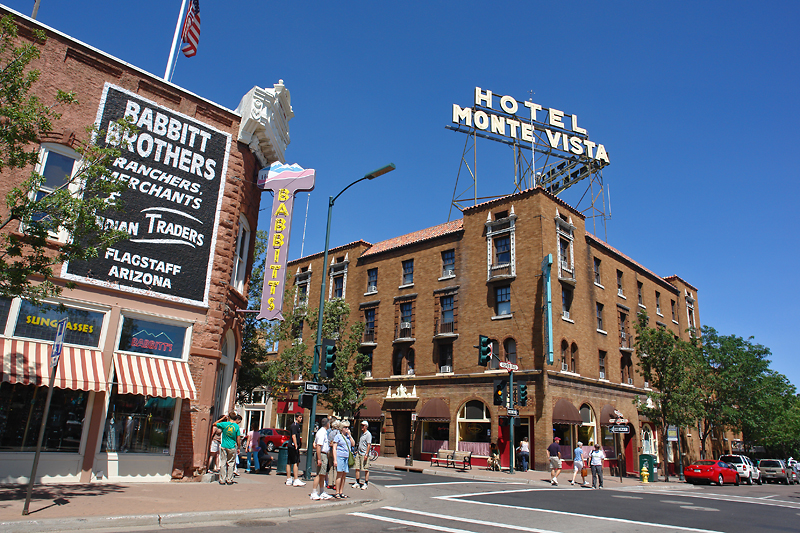
Daily life here stays closely tied to the surrounding landscape. Downtown Flagstaff is centered around historic brick and red sandstone buildings packed with local coffee shops, independent restaurants, and outdoor outfitters. Threading through the entire community is the Flagstaff Urban Trail System, a network of dozens of miles of paths that link neighborhoods directly to schools, parks, and national forest trailheads. Cultural landmarks like the Museum of Northern Arizona showcase the art, natural history, and living traditions of regional Native tribes, keeping the area's rich heritage woven into the modern mountain lifestyle.

Flagstaff also serves as a thriving regional center with a steady, diverse economy. Northern Arizona University anchors the south side of town, bringing thousands of students, cultural events, and major employment opportunities. Beyond education, the local workforce is supported by healthcare providers, medical device manufacturing, astronomy research facilities, and year-round tourism. Historic Route 66 and active freight rail lines still pass directly through the middle of town, where the familiar sound of train horns blends into the rhythm of life in the pines.
Top Rating Signals
Highest current ratings for this town.
Loading town details...