
Rochester, NY
- Elevation
- 504 ft
- General Quality Overall rating out of 100
Highlights
What stands out in Rochester
Explore
More places like Rochester
About Rochester
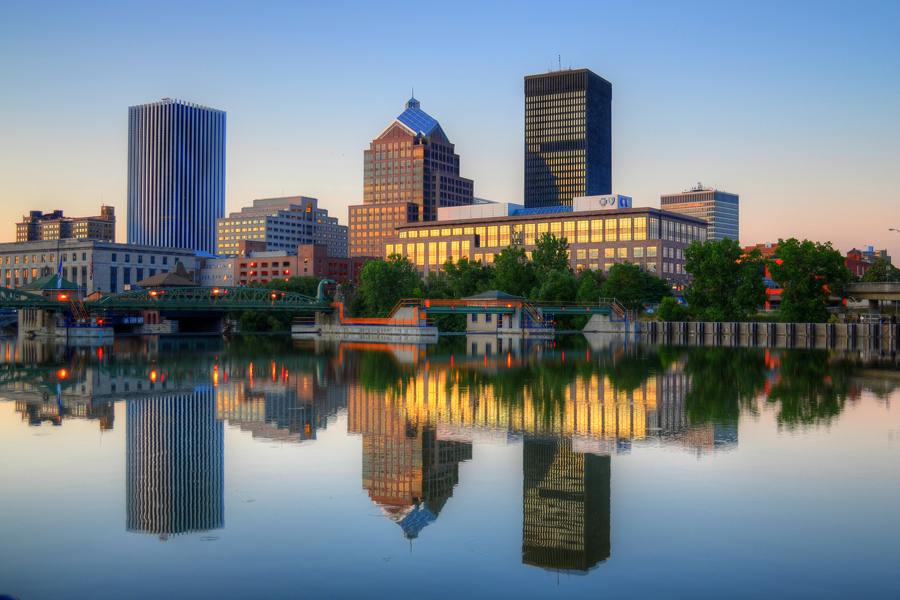
The Genesee River runs right through the center of Rochester, acting as a natural landmark that connects different parts of town. In the south, the river flows past the leafy University of Rochester campus and medical center. As you head downtown, it plunges over the dramatic High Falls before continuing north all the way to the sandy shores of Lake Ontario at Charlotte. Outdoor enthusiasts love the Genesee Riverway Trail, an off-road path where you can bike or jog past parks, historic neighborhoods, and scenic river overlooks like the pedestrian Pont de Rennes bridge.

Rochester's story started with waterpower, when rushing waterfalls fueled flour mills along the newly built Erie Canal. Locals still nod to that history, often referring to Rochester as both the Flour City for its early industry and the Flower City for its famous botanical nurseries and annual spring Lilac Festival. The city also has deep roots in American civil rights. Susan B. Anthony made her home and organized voting rights campaigns here, while Frederick Douglass published his abolitionist newspaper, The North Star, from downtown offices. That independent, community-minded spirit still shapes the city today.

Modern Rochester is driven largely by healthcare, higher education, and advanced technology. The University of Rochester and its expansive medical network, including Strong Memorial Hospital, form the backbone of local employment alongside the nearby Rochester Institute of Technology. Building on the city's historic camera and film roots, the area has also transformed into a thriving hub for optics and imaging companies. On the creative side, the renowned Eastman School of Music brings world-class performances to downtown stages, hosting hundreds of incredible concerts every year that are free for anyone to attend.

Day-to-day living in Rochester offers plenty of local character without the hassle of a giant metropolis. A weekend favorite is the historic Rochester Public Market, open year-round with rows of fresh local produce, artisan foods, flower vendors, and bustling food truck rodeos. Public transit makes getting around manageable, with regional bus routes connecting residential neighborhoods directly to the downtown center. Whether you are browsing books overlooking the river at the Central Library or grabbing coffee in lively neighborhoods like the South Wedge and Park Avenue, settling into the local rhythm comes naturally.
Top Rating Signals
Highest current ratings for this town.
Loading town details...